Showing posts with label Art and Culture. Show all posts

Friday, 5 November 2010

Art for a Few, Education for a Few and Freedom for a Few


"Money is a magical phenomenon. Because there's nothing there. You didn't burn, for example, food. Most of the governments of the world destroy food every day so as not to bring down the market price. You didn't burn Art (the pictures on the notes are okay, but you wouldn't want them on your wall); you didn't burn Literature -both of these things are burnt every day; you didn't burn people. What you burnt was paper that is a symbol of value."

Alan Moore, on the K Foundation's burning of £1 Million
from The K Foundation Burn a Million Quid, 1995
A conflicting argument to Moore's assessment of money can be found in the musical Cabaret which debuted on Broadway in 1966, that of the song lyric Money Makes The World Go Round, which has become somewhat of a motto for those occupying the board rooms of the huge corporations around the world, as well as those gambling every day in The City and on Wall Street. Far from being billions of years worth of cosmic dust barrage from even before the formation of the planet, money plays no part in the rotation of the Earth. In fact, if anything, Money may be the one thing that will cause the world to stop rotating, burst into flames and fall out of the sky.

Mark Wallinger: Save The Arts
Last week's Comprehensive Spending Review as announced by our new leaders in the coalition government, aiming to "terminate the budget deficit" in full over the next four years. The main event has been the announcement of £81 billion worth of cuts to Government spending in order to combat the £115 billion deficit, with the remaining balance to be met by raising taxes, such as the impending VAT increase from 17.5% to 20% in January. The spending cuts include (in no particular order): 50% in social housing; 8% in Defence; State pension age to rise to 66 for both men and women; "funding for police will be cut by 20%"; "60% cut in capital spending and Educational Maintenance Allowances"; "Department for Business, Innovation and Skills (BiS) is to be cut by 7.1%."; "Sport England ... funding cut by 33%"; A freeze in the Science budget which works out as "a cut of less than 10% over four years" in real terms; "3,000 fewer criminals in prison"; Abolition of 192 quangos; "7.5% real terms reduction in revenue and another 41% reduction in capital funds" for Wales; "£4bn cuts in the budget" for Northern Ireland; "7% cut in resource spending and 38% cut in capital spending" for Scotland; 30% to the Arts Council of England; and 40% to Universities. Of the few departments to have been "spared" in the spending review, the NHS budget "will rise by £10bn."

Despite the Conservative's pseudo-socialist rallying cries that "we're all in this together" it appears the banking community are getting away quite lightly in terms of cuts in comparison to every other aspect of society. With the spending review came a "new bank levy [that] will raise about £2.5bn a year from 2012", to allow the banks whose pivital role in 2008's Credit Crunch sparked the global financial meltdown, and the price tag for the UK bailing out it's banks, which came to around £850 Billion led to the country having such a massive budget deficit. Financial Secretary Mark Hoban said rightfully that banks should "make a fair contribution in respect of the potential risks they pose to the UK", however early indications are that the "levy would be set at 0.04% in the first year and would then rise to 0.07%", nowhere near as as huge a drop or as big a saving as being faced throughout the rest of society. Leading government think tank, the Institute for Fiscal Studies has already hit out at the spending review, with claims that "poor people would be hit harder than the rich", but in the meantime leading banks such as Goldman-Sachs are willing to continue to pay out massive bonuses, with their vice-chairman, Conservative peer Lord Griffith calling on the taxpayers to "tolerate the inequality as a way to achieve greater prosperity for all". Other banks are hitting out at the supposed "severity" of the rates levy, despite "The Treasury spent the summer consulting" the banking industry, something it failed to do for the rest of the population.

Lord Browne
The restructuring of the finances in Higher Education were not put out to consultation, or in fact given over to one of the hundreds of qualified specialists in this sort of thing who are already working for the Government through Universities, this particular pleasure was allocated to Lord Browne, former head of BP and House of Lords crossbencher, whose only apparent insight into Universities was that he had been to one. Browne's report, which was used as much of the basis for George Osborne's radical reshaping of the finances of Universities, outlined that "tuition fees which are capped at £3,290 a year, should be raised to as much as £7,000" sparking fears that we could end up in a situation where "that students are essentially consumers who should pay for services they receive – the more upmarket, the higher the price." However following the spending review, Lib-Dem Business Secretary Vince Cable and Deputy Prime Minister have made assurances that the cuts would be capped, with Mr Cable telling BBC News "I don't think there's any prospect of having unlimited fees - that simply isn't going to arise."

However during the election campaign, the Liberal Democrats made a firm pledge dedicate to "Scrapping university tuition fees during first degrees" entirely, and have since faced "the first serious revolt within the Liberal Democrat party since the formation of the coalition" with Lib Dem MP Greg Mulholland stating that "It is certainly my belief that this is not a done deal and the strength of feeling among Lib Dem MPs could derail any attempts to see fees rising substantially and I will certainly be doing everything I can to make that happen"  and former party leader, Sir Menzies Campbell adding that "It would drive a horse and cart through my credibility in my capacity both as chancellor and as an MP if I were to renege on that pledge – and I don't intend to." With an uncertain track record on the issue and, according to the Guardian, Conservative sources disagreeing with Clegg and Cable "that elite universities should have the freedom to charge what they like", which led Aaron Porter, of the National Students to warn that "A market in course prices between universities would increasingly put pressure on students to make decisions based on cost rather than academic ability or ambition."


As well as the proposals for tuition fee increasing, the review, or Securing a Sustainable Future for Higher Education,  outlined in section 6.2 PUBLIC INVESTMENT WILL BE TARGETED ON THE TEACHING OF PRIORITY SUBJECTS, outlining that public investment in teaching budgets would be reserved for subjects which a perceived "prority" defined as  "Typically the courses that may fall into this category are courses in science and technology subjects, clinical medicine, nursing and other healthcare degrees, as well as strategically important language courses." An Observer Editorial surmised that "The big problem with Lord Browne's report is not in the mechanism it uses to develop new funding streams, but in the fact that it uses that mechanism as a pretext to slash teaching grants", indeed the realities of the suggestions outlined by Lord Browne were brought through in Osborne's spending review by cutting the Higher education budget "from £7.1bn to £4.2bn by 2014." Before the report was published, The University and Colleges Union warned “Cuts of this magnitude will leave many cities and towns without a local university and our students paying the highest public fees in the world." with Aaron Porter surmising that "The true agenda of the coalition government this week is to strip away all public support for arts, humanities and social science provision in universities and to pass on the costs directly to students' bank accounts."

Backing up the fears of the NUS, University Minister David Willetts, while announcing the £9000 cap on fees told the Daily Mail of his desire to "rate degrees by the employment rates and salaries of graduates, ...  the best degrees to be given ‘kite marks’ by professional associations as an indication that they are rated highly by employers. which the Mail, in its usual non-sensationalist style described as a "war on pointless degrees." It seems that Universities, once places of education, morality and thinking are, since their transferral to the Department for Business, Innovation and Skills are simply another tool for "economic prosperity" and wealth generation.

With the Spending Review came announcement of the Arts Council of England facing a "29.6% cut [which] will see ACE's current government grant of £449m drop to £349m by 2014" which included a condition that cuts of 15% would be required to be made from regularly funded organisations which could mean that "at least 100 arts organisations will lose their funding." As alarming as the thirty percent cuts are in themselves, the condition placed on the arts council in how to administer almost half of these cuts has been criticised for eroding the "arms-length" policy by which the Arts Council does its business, in a move akin to washing his hands of the affair, Culture Minister Ed Vaizey stated "We've made it clear that it's a condition of their settlement that ACE limits cuts to the overall RFO budget to 15%; but if they choose not to fund certain organisations that is their decision." going on to say should the ACE not comply with the condition that "Life would get very interesting."

As the dust settles, ACE has already begun outlining how its cuts would be made, which would include "7% first-year reduction for regularly funded organisations." and "£6 million from savings due to the postponement of a major public engagement project, cuts to our audience development plans, and to funds for partnership working with local authorities and the private sector." Aside from the ACE, "The British Film Institute will see its budget cut by 15%" while a "budget cut by 16%" by a six-year freeze in the licence fee and covering the costs of the World Service would see the BBC loosing a "total of £340m of extra money annually" and being described as the "moment when the BBC sacrificed its fiercely defended independence for a role akin to another government department."

North of the Border we will have to wait until the end of this month to hear John Swinney's Proposed Budget for the next fiscal year outlining how Scotland will deal with the "£900m reduction", although at the moment unknown, some suggest that there is very little left to cut. The two issues discussed above, that of Education and Culture are devolved issues, dealt with and administered by our SNP Government, who's future is in the balance given the upcoming Scottish Elections in May. However Scotland faces its own cultural confusion around the emergence of the Creative Scotland, and already our education establishments are preparing to weather the storm, while others are beginning to crack under pressure.

As previously mentioned, the Robert Gordon University, an institution which has long held the principles outlined by David Willetts and the Daily Mail at the core of its educational ethos, a University which proudly boasts that "business and entrepreneurship lie at the heart of much of the university’s academic offering," and its "best rates of employment in graduate-level jobs" have announced that "Given the current public spending environment it is important that the University addresses resource issues now to avoid greater challenges in the future." To this end, using the impending public spending cuts for Scotland as a handy excuse, the University intends to deal with a budget deficit of £370, 000 at Grays School of Art, one of Scotland's Four Art Schools, by informing staff that "a voluntary severance scheme would be available for those wishing to be considered." The poetic irony of the move is that the results of a consultation, and the announcement of the redundancies and reprofiling of the School is to be made on November 15th, the day before the 125 Anniversary of the School's founding.
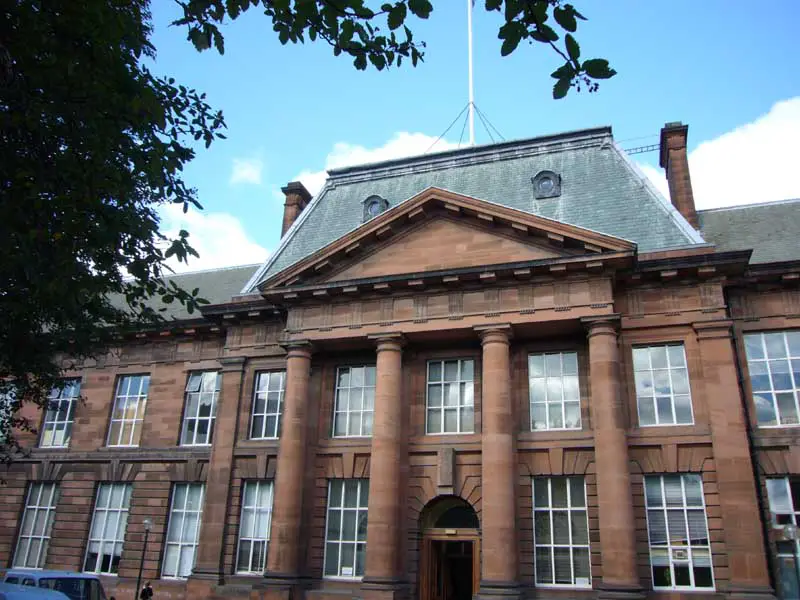
Edinburgh College of Art: Crisis
Meanwhile, at Edinburgh College of Art news of a merger with Edinburgh University was mooted with reports that "ECA principal Professor Ian Howard sent a letter to staff explaining that the move was being examined in the light of the current economic situation." the letter outlined how the merger brought "very exciting possibilities for enhanced teaching, research and creative endeavour" with The Scotsman describing how "As a joint institution, the two could make substantial savings by sharing facilities and services, such as human resources, libraries and student accommodation. Buildings made redundant could be sold off." "It [University of Edinburgh] will work with the college [ECA] in securing a financially sustainable future" described Melvyn Cornish, Edinburgh University Secretary,  however, the news did not bode well for ECA alumni. Dr Barbara Rae, Chair of the Alumni Association stated that "We believe it imperative to safeguard the Edinburgh College of Art in the same way the Glasgow School of Art is respected and revered, both founded long ago to explore and promote originality in the arts" and within days of the announcement it emerged that four governors of the College had resigned over the matter, with Lady Mathewson declaring that "I and my fellow governors who have resigned no longer have confidence in the Chairman or Principal who have driven through an incomplete merger proposal that has now been put out to public consultation, excluding key financial information."

Attempting to quell the furore, an ECA spokeswoman refuted Lady Mathewson's allegations "the suggestion that there has been a failure to explore the options or to ensure transparency in the process is entirely untrue." This was before the real nature for the merger plans emerged.  The Sunday Herald revealed that "The University of Edinburgh and ECA are asking the Scottish Funding Council (SFC), the body that funds higher education in Scotland, for £13.8m to enable the merger. The majority of this, £9m, is to bail out ECA’s bad debts" also detailing a building maintenance bill of £44.1 Million to the College's estates which are reported to be only worth 37.3 Million - were Edinburgh College of Art a car it would be a write off.

Much of the College's cash woes centres around the redevelopment of Evolution House in the City's Westport. The Sunday Herald article points out that "The college has spent £21m on Evolution House but it is now worth only £10.6m" and "that Lloyds Bank could in theory at any time require repayment of the whole £11.5m loan, because the college’s financial performance has meant covenants with the bank have been breached." Among other shady dealings, ECA has been granted a £1.6m advance from the Scottish Funding Council, and borrowed almost half of its Andrew Grant Scholarship fund, a move which the report claims "the university’s own legal advice suggests that it is not clear that the trustees were working within the law in making this loan.” All in all, the leaked document paints a disturbingly glum picture of the College's financial situation, which also states that "“ECA would not now be trading if it had not received advances of grant from the SFC.”

These two cases provide a horrifying hammer blow to half of Scotland's Higher Education Art Provision, before the cuts outlined in the Spending Review have even taken effect in Scotland. The uncertainties surrounding the provision of arts and humanities education was spelled out by Natalie Fenton, Deputy Head of Media and Communications at Goldsmith University, where students yesterday began an occupation in protest to the education cuts and tuition fee rises: "This is a massive cut to higher education and a slashing of the public subsidy for teaching, which will hit the arts, humanities and social sciences particularly hard if the science budget is going to be protected.

"Some institutions will close, and it's inevitable there will be mass redundancies across the sector. Goldsmiths will be forced to take on an enormous number of international students who pay higher fees to make up for the cuts. Class sizes will rise, they'll be humongous; the staff-student ratio will rocket and nobody will be satisfied.

"Some institutions will close, and it's inevitable there will be mass redundancies across the sector. Goldsmiths will be forced to take on an enormous number of international students who pay higher fees to make up for the cuts. Class sizes will rise, they'll be humongous; the staff-student ratio will rocket and nobody will be satisfied. "By only protecting science, they're signalling that arts, humanities and social sciences are worthless. But these are the disciplines that engender civility, and teach empathy and tolerance."

The next four years look set to be grim, with some claiming these are the "biggest spending cuts since 1945" but what is the outcome of the cuts, what exactly are they for? While David Cameron and his LibDem human shield, Nick Clegg, are quick to defend the cuts in terms of fairness: "Fairness is actually about asking how much people give as well as how much people get and I think that we have done it in a way so we can genuinely say it is difficult, it is tough but it is fair" and senior Tories such as Lord Ashcroft urging everyone to see the "bigger picture." However no one in Government is looking at the "bigger picture", the picture they are looking at is 156mm x 85mm and has the queen's face on it and a bunch of numbers.

The motivation behind the Comprehensive Spending Review is by no means far-sighted, in no way looks towards any notion of a "bigger picture", it is simply an exercise in backpedaling, with the way of life of everyone in the country paying for the mistakes and reckless gambling of the few. The spending review is based on the idea that "reducing the deficit is a necessary precondition for sustained economic growth", but essentially it is about reducing how much debt the county is in so we can start over again, return to the status quo and let the cycle run its course once more. "The Spending Review is underpinned by a radical programme of public service reform, changing the way services are delivered by redistributing power away from central government and enabling sustainable, long term improvements in services", but it in no way examines how we got in this mess in the first place, it no way intends to reform the fiscal system to which we are all unwitting prisoners. Love it or loath it, the capitalist system by which our wold prescribes has failed, not just in the last two years since the nightmare of the Credit Crunch, but it has always failed, it is destined to fail. Every ten to twenty years we find ourselves in the same situation, it happened in the mid seventies, the early eighties, the early nineties and now the late 2000s, and what always happens is a "tightening of the belt", cuts to frontline public services until economies begin to grow again and then we just get back to the way things were.

The difference with the current round of recession-beating belt-tightening is the severity of the cuts we are facing, estimates of "1.6 million job losses across the public and private sectors", the erosion of the welfare state, closure of Universities and Arts Organisations, small business crippled by an increase in VAT. Once you cut these vital services, "reform" education, close business it will be very difficult to get them back, it has taken sixty years to build the UK to the powerhouse of creative and cultural initiatives, and that could be completely reversed in less than four. And even then the nature of the focus of the cuts, with emphasis placed in the wrong place: "The coalition is now poised to take billions out of the economy, all in the hope of unleashing a private sector recovery based on manufacturing and exports. But to whom? The strategy relies on wide-open borders and eager consumers with money in their pockets. That is not how the global economy looks right now."

A reform of the ecomonic system, perhaps a movement away from a monetary based system (given that, according to Moore, it is based on something that doesn't exist in the first place) would require a sort of global joined-up-thinking which our politicians and managers seem unable to engage in. It would require putting aside petty differences, it would require putting aside nationalism, imperialism and one-upmanship. It would require the global communities to sit down and think about a solution which is better for the world, one which not only takes into consideration economies, but other global concerns, overpopulation, depletion of natural resources, climate change etc. However to think on this scale would require looking at what is best for the many, rather for the few, and what is best for all of society and the planet, not just the west.

It would require the relinquishing of the the very thing that money represents: power. And with power comes control, and inequality, as former US president said in 1826 "There are two ways to conquer and enslave a nation. One is by the sword, the other is by debt."

Sunday, 15 August 2010

Arts Over Elbow

Less than a week after Aberdeen City Council decided to back Sir Ian Wood's plan's for a street-level piazza and ironic Garden on the site of Union Terrace Gardens and the Denburn Valley, necessitating the council to abandon a plan which had assured their backing, for a Contemporary Arts Centre spearheaded by Peacock Visual Arts, Andrew Dixon, newly appointed CEO of Creative Scotland stopped by Aberdeen on his grand tour of his new turf. After a number of positive and sympatheric meetings with cultural practicioners and organisations throughout the city, The Press and Journal and Evening Express triumphantly heralded his arrival, pulling him right into the debate over the future of Union Terrace Gardens, proclaiming :"Arts Centre should back world-class Garden's Bid: Culture Boss In Call to Peacock."

The Press and Journal, the less sensationalist of Aberdeen Journal's twins diabolique, claimed "Sir Ian Wood’s plans for Union Terrace Gardens in Aberdeen received a surprise boost last night after the incoming boss of Scotland’s new arts and culture body praised the project." Rightfully, given the years of trepidation and suspicion around the motives and realities of the new body, the reports caused a ripple through the damaged cultural community of Aberdeen, still licking those fresh wounds since the approval of the City Square which spread quickly throughout the wider Scottish Art Community, those confused and shocked by what had transpired in Aberdeen, and those anxiously waiting for indications of the working practices of Creative Scotland.

While Dixon was quick to cry "misquote" in The Herald podcast saying "I never said I am a supporter of the gardens project as such. What we are interested in is getting the right cultural facilities for Aberdeen" and giving the official advice to those involved that "They ought to take a little time now to see how we can harness the energy that’s there, the public interest there and get something that makes Aberdeen a better place to live.” Despite his apology, Dixon had already stepped on a cultural landmine by making any comment on the fiasco, something which the Scottish Arts Council had refrained from doing over the course of the previous eighteen months. The Times accused Mr Dixon of "lauding the “ambition and vision” shown by plans for the project, which has been promoted by Sir Ian Wood, the oil tycoon", indeed describing the City Square as "a real opportunity to do something interesting for the future of Aberdeen." This provides an interesting view on a project which has been described as "a mad idea underpinned by the offer of big money which is an illusion" by the RIAS, and criticized, ridiculed and debunked by a long line of cultural practitioners, architects and critics.

Andrew Dixon's apparent lack of knowledge concerning the perspective of the cultural practitioners his organisation is supposed to support and represent is not suprising given the emergence of a email to an artist which suggests that he harbours "confusion over the role and responsibilities of the new national funding body Creative Scotland." Kenneth Roy of Scottish Review's analysis of the aforementioned email finds him "still no clearer what the chief executive of Creative Scotland is trying to say about his own organisation." Said email, directly from Dixon to an unnamed artist, writing to CS with frustration surrounding a funding refusal is as follows:

'I am sorry that you didn't find my answer convincing but perhaps you misunderstand that we will not be a funding body in the old sense of the Arts Council but a strategic body,. There will no no point in making multiple applications to us as we will be working more strategically with others agencies.'
In his editorial, Roy rightfully points out that the statement is in direct contradiction to a statement on Creative Scotland's own website to the effect that "Creative Scotland inherits the investment commitment of the Scottish Arts Council and Scottish Screen." The sense of confusion coming from the very head of this new organisation is indeed alarming. In an attempt to belay concerns expressed by artist groups, journalists and the individual artist (who may or may not be able to secure funding from the organisation to support their practice), Mr Dixon has been writing to those expressing concern. One such correspondence, sent to The Guardian's Charlotte Higgins:
"As a new organisation it is inevitable that there will be changes in both the way Creative Scotland operate and what we support from both predecessor organisations. That is what the organisation was created to do and I intend to put that into practice to the benefit of Scotland and its artistic and creative community."
going on to say:
"Creative Scotland launched on 1st July and the board met for the first time on 12th August and is beginning to develop the first corporate plan for the new organisation for 2011/12 in line with an agreed timetable with the Scottish Government by the end of the year."
This ties in with a reported comment from CS chair Sir Sandy Crosby, in relation to the role of the organisation that "he wasn't sure since there hadn't been a board meeting yet." Fair enough, one might think considering the relative infancy of the organisation, however the concept, and even the name "Creative Scotland" is not that new, having been on the Scottish Government's agenda since 2006 when introduced by the previous Labour/Lib Dem administration.

While the original Creative Scotland Bill failed to pass the finance committee in June 2008 with Labour MSP Ken MacIntosh stating "In her [Linda Fabiana, then-Culture Minister] opening statement, she led members to believe that the budget for the creative industries would be transferred from Scottish Enterprise to Creative Scotland. In her summing-up she then clarified that no such budget would be transferred. This is a total shambles and gross incompetence.”

However, the minority SNP administration were not to be perturbed with Ms Fabiani stating that "I am 100 per cent committed to establishing Creative Scotland to bring benefit to our arts and cultural sector as soon as possible. The Scottish Parliament has unanimously endorsed the principles of Creative Scotland, even though that bill did not pass in June." going on to describe how the Government "are ensuring this happens through the Public Services Reform Bill", which passed in March this year, with current Culture Minister, Fiona Hislop, describing how Creative Scotland "will build on the successes of the Scottish Arts Council and Scottish Screen, putting artists and creative practitioners at the heart of all its activities, enhancing Scotland's international reputation for cultural excellence, and enabling more people in Scotland to enjoy and take part in cultural activities."

Swiftly, Creative Scotland, and its £35,000 Logo were launched in the following months, with the Scottish Arts Council and Scottish Screen as swifly making way for the new organisation. Given the long and difficult process in establishing the new quango, you would suspect that over this time Ministers would have some ideas of certainty over the roles and responsibilities of the new organisation, and that perhaps its newly appointed board could have met and decided on its activities going forward, possibly before the dissolution of its predecessor bodies to inspire confidence in the agency, especially given the growing mass of critics throughout Scotland's Cultural community, which The Times described as a "state of near-mutiny and rebellion among the cultural establishment."

The confusion and uncertainty surrounding the newly-founded organisation has not just caused concern for those it is designed to support. Green MSP Robin Harper who tabled a motion in the Scottish Parliament setting out "That the Parliament notes that the full board of Creative Scotland has yet to meet and believes that this has led to a remarkable degree of uncertainty about that organisation’s function;" and asked that "Scottish Government to meet representatives of Creative Scotland as soon as possible and demand sight of its strategic plan and mission statement within a reasonable timescale and for Creative Scotland to undertake minimum expenditure on offices, staff and equipment until such time as its function can be fully defined." Creative Scotland's current expendature, in addition to the £60 Million budget it has been granted to fulfil obligations already allocated through the Scottish Arts Council, has included an the alarming aforementioned £35,000 paid to the Leith Agency for a logo described as "absolutely awful, uninspiring, doomy. A symbol for the times maybe but surely not what is wanted" among other, harsher, insults, a "launch" ceremony in WASP's new Briggait Initiative costing £17,ooo and £3.3 Million in administrative fees to cover the merger. All is not lost, however as "the merger of the arts council and Scottish Screen had led to a 20% reduction in staff numbers", not a sign of remorse or mention of the human aspect of this 20% reduction being people's jobs and livlihoods, people who were often artists, filmmakers or other creatives or professionals actively involved in the cultural sector.

One of the few things that is certain is that "The agency is to review its £18m core funding for 52 "foundation" arts and drama companies, theatres, cinemas and festivals from Shetland to Glasgow as the public sector braces itself for heavy and long-term cuts in government spending." which has caused a ripple of uncertainty through cultural professionals and organisations across Scotland unsure of what the future holds. One almost certainty with possible devastating implications, is "that direct funding to help make new Scottish films would end", given that "18,000 people are employed in Scotland’s screen industries" this certainly raises alarm bells.

Scottish Screen was established in 1997 as a merger of the Scottish Film Council, Scottish Screen Locations, Scottish Broadcast and Film Training and distributors of the Scottish Film Production Fund. Said Production Fund "initially set up in 1982 by the Scottish Film Council and the Scottish Arts Council" has been responsible for directly funding of countless feature and short films which otherwise would probably never get off the ground in Scotland. The support provided: "Maximum Investment - £300,000 - Feature Films (budgets over £500,000); £100,000 - Feature Films (budgets under £500,000); £250,000 - TV Series; £50,000 - Short Films" is integral to ensuring films are made, that filmmakers whose films may not be able to get funding in a conventional manner are supported and developed and ensures that the screen industry in Scotland is healthy and allows a huge portion of those 18,000 people working in the screen industries to remain in employment. If this direct funding for the production of Scottish films is to end, then it leaves one wondering what has become of the Scottish Film Production Fund and what will become of the Scottish Film Industry, the many short films schemes, such as Tartan Shorts, which have over the years allowed internationally acclaimed and award-winning Scottish filmmakers such as Peter Mullan, David MacKenzie, Kevin MacDonald et all have their films made.

Unfortunately Creative Scotland's apparent direction is leading by example brought forwards by our new Conservative Overlords in Government. Jeremy Hunt, the new Culture Minister announced in July the Government intent to scrap the UK Film Council, a move motivated through "our drive to increase openness and efficiency across Whitehall, it is the right time to look again at the role, size and scope of these organisations."
The move was quickly condemned by Tim Bevan, the body's chair claiming that the move "has been imposed with no notice and no consultation... I think we can all agree that this is short-sighted and potentially very damaging, especially as there is at present no roadmap setting out where the UK Film Council’s responsibilities and funding will be placed in the future.” While assurances have been made that committments to the financing of new British Films will not be cut, and that the UK Film Tax Credits will remain in place, there has been no indication as to who will now administer and distribute the cash and under what criteria future applications will be judged under.

Further alarm bells begin ringing with the abolition of the Film Council, as it came alongside assurances from Mr Hunt that "16 public bodies, including the Museums, Libraries and Archives Council (MLA) would lose their funding as the government committed to "increasing the transparency and accountability of its public bodies, while at the same time reducing their number and cost."
This move spells out categorically that the country's cultural industries and communities are in for a huge hit as part of the cuts planned by the new Government in an attempt to ride out the recession, amid a review of arms-length organisations which could threaten the integrity and critical autonomy the arts represent within society.

Andrew Dixon's response in the face of possible funding cuts and a "tough" immediate future is to "try to increase private funding and sponsorship, form alliances and share resources", which could be seen as essentially privitising the arts. Private funding and backing is an uneasy bedfellow with creative and expressive arts, which could challenge the aforementioned integrity and critical autonomy, the age of decent philanthropy is long dead and these days companies and individuals who invest wish to see a return in their investments, to see what's in it for them, and not simply for an artist. Keen sensible business sense means that a company would require to invest in a well established "brand", an internationally successful and acclaimed Artist, or Filmmaker, or play, one that will definately bring them a return. However these success stories are already made, they don't necessarily need investment in a way in which the unknown, struggling "emerging" artist does.

In the face of the 25% cuts which have been proposed across all public bodies, a survey carried out by The Threadneedle Prize emerged that "And a fifth of the 2,022 British adults questioned said visual arts should not be given any government funding" while a blog by Jonathon Jones claims "it's no use the art community complaining about this image when it has spent the last few years extravagantly vaunting connections with big money." However, Samuel West, of the London Evening Standard spells it out perfectly:

"The arts cost only 0.07 per cent of total public spending — 7p in every £100. The Arts Council theatre budget for 2008 was £54 million; in return, the theatre paid back £76 million in VAT in London alone. That's a 40 per cent dividend.

Why doesn't the Chancellor want to fund that level of return? £54 million is one 30,000th of the sum used to bail out the banks."
As does Glasgow-based Artist David Shrigley:


Shrigley's film was used to launch an artist led campaign to Save The Arts amid the cuts, and has a petition which you MUST SIGN. A further group I Value The Arts is also giving information and putting pressure on the Government to go easy on the cuts to culture to ensure that the vibrant, diverse and unrivaled strength we have in terms of culture within the UK which has built up over the last fifty years is not sacrificed by short-sighted beurocrats and politicians in a party-political blame game and a vain attempt to save face.

Petty squabbles over who is to blame for the current economic situation, or indeed simply returning to the greed-based globalist society which lead us to the situation we find ourselves in is not the way forward. Culture, the arts, free expression and creativity, something that is built not from capital gain or commercial worth, something universally inclusive, something which comes from the soul and enriches life without asking for anything in return should not be a victim of a system which sets out to exclude and create divisions.

Tuesday, 2 March 2010

An Inevitable Victim of Development

With less than five days to go on the public consultation into The City Square Project, the results of the process are beginning to roll in, ACSEF appear to be looking for a getout clause from their "robust and comprehensive" exercise.

On Monday the Evening Excess published the results of an independent opinion poll they themselves had commissioned Ideas in Partnership, yet another PR company, to carry out relating to the City Square. The article highlighted that "the survey of 500 people found just 38 had made the effort to provide feedback on the £140 million scheme put forward for Aberdeen’s Denburn Valley" and that the straw poll of the 500 asked brought results in as "266 (53%) against and 230 (46%) in favour of the proposals to raise the area to street level. Four people (1%) did not have an opinion on the proposal." While there is a tight margin between for and against votes, the apparent low turn out appears to have instilled a fear in Sir Ian Wood: "Unless the majority express their views formally through the public consultation in the remaining few days, there is a real risk this project will not go ahead" going on to say "We have always recognised that the strong negative opinion will make up a large part of such a low participation."

As usual the statements made by ACSEF and those by Weber Shandwick regarding the same subject are not quite in alignment. On the City Square Project site a press release from the 23rd February claims that "official participation is higher than consultation on the Forth Crossing, GARL and Edinburgh Trams." and that "Participation in the City Square Consultation looks set to be one of the highest in Scotland," describing participation as "unprecedented" and a "huge response." As expected the responses to date from Weber Shandwick have been by the book in comparison to the downright unprofessional conduct from The Big Partnership and ACSEF as Weber Shandwick have been tasked with carrying out the consultation while ACSEF have a vested interest in making sure the scheme goes ahead.

The brief for the process outlines how Scottish Enterprise would be informed of progress daily by the consultant with further regular engagement between the consultant to "liaise with a small Working Group representing the larger Client Stakeholder Group." The working group includes Dave Blackwood from ACSEF, Jennifer Craw representing Sir Ian Wood, Fraser Innes representing Aberdeen City Council, and Derick Murray from NESTRANS. This means that throughout the duration of the consultation these stakeholders are being informed of how the results are going which has presumably dictated the PR output from ACSEF over the last two months. While stating initially that they "do not want to pre-empt the consultation", it seems now that the results are coming in that they are looking to distance themselves from it.

Throughout the process, Sir Ian has been insistant that the Civic Square is "essential to safeguard the future prosperity of the city" and that "Aberdeen faced a bleak future and serious decline" attempting to forcast certain doom if the Square is not accepted by the Aberdeen population, obviously without explainging how the creation of a five-acre expanse of non-commercial, non-retail civic space is so "essential." This week the north-east committee of the Scottish Council for Development and Industry (SCDI) spoke out in favour of the City Square Project, however were quick to stress that "should the Union Terrace Gardens/Denburn Valley project not be supported, SCDI believes that the north-east economy can still be successful in the long-term” dispelling once and for all the scaremongering tactics touted by Sir Ian and ACSEF as attempts to use fear to encourage the North-East public to support Wood's personal vision for a five acre space which belongs to the public of Aberdeen.

Also emerging in support of the plans this week was Stewart Spence, using more of the negative rhetoric used by supporters of the Square damning the city centre. Mr Spence declared that "he warns guests to wear blindfolds if they visit the city centre." Hardly the most inspiring way to market his exclusive hotel as belonging to a city which isn't worth looking at, however of course he can see a solution, claiming that "only way to restore civic pride was to back Sir Ian Wood’s proposal for a new civic square." Surprising how that suddenly destroying Union Terrace Gardens and decking over the Denburn Valley has suddenly become the only way to turn around Aberdeen's unfortunate decline, especially as it was never considered as such until Sir Ian decided it was worth £50 million of his personal fortune. Unsurprisingly Stewart Spence sits on the ACSEF board, making him the fifth of the ten business representatives on the board to speak out in favour of the project that they themselves are promoting.

Also this week (and it's only Tuesday at time of writing) Tom Smith, ACSEF chair, has jumped on an unsubstantiated claim by Alex Salmond at the ACSEF Youth Summit that "the funding [for Peacock] would be available whether the arts centre was in the gardens or as part of the new square." As usual, a press release was put out without ACSEF checking the facts with Peacock themselves, or even funding body Scottish Arts Council who have stated the funding would have to be earmarked by the end of the month. Smith claimed that "We can have it all," again ignoring the huge proportion of non-Peacock supporters who wish to retain Union Terrace Gardens. Unable to deny that the Gardens will be excavated to make way for the concrete and steel structure ACSEF choose to ignore the concerns of the thousands of citizens who simply do not want to see the Gardens removed, or even want to see the great expense involved with removing those Gardens to create a superficial street-level ornamental garden.

As friday draws ever closer only time and press release will tell how many more transparent tactics ACSEF will employ in order to put their own ignorant and environmentally unsound stamp on the face of a City which does not belong to them. Aberdeen City Centre belongs to the people of Aberdeen, and to anyone who cares about the city and the shape and future of the City Centre should be decided by them, and not a single man with a narrow, twenty-year old vision.

Support UTG from Adam Proctor on Vimeo.

Friday, 26 February 2010

The Sound of One Hand Clapping


“There is however always a danger when one individual claims to speak for others."

Sunday, 21 February 2010

A Real Architectural Blight


“If I have a headache I don’t get a foot massage,”

Wednesday, 17 February 2010

What A Tangled Web We Weave...

"Negative and mis-information provided by groups opposed to the project will be monitored so that their actions, which may have negative impact on the project, can be anticipated and the presentation of clear facts and informed opinion made public"
ACSEF City Square Project Communications Strategy

The reactionary policy of ACSEF and Sir Ian Wood to criticism of The City Square Project has been a series of half-hearted ill-informed statements which seek to deny everything or appease everyone, while contradicting previous statements and generally confusing the situation. Rather than counteracting "mis-information" ACSEF are actively producing more and more confusing and contradictory statements about the nature and aims of the project. While dismissing those who oppose the plan as "based on a wholly inaccurate description" or "not fully understanding the plans"and Sir Ian expressing that his "real disappointment is over the confusion and misinformation in the public domain,” ACSEF's statements shed little light on what the plans are, or even that they know them themselves.

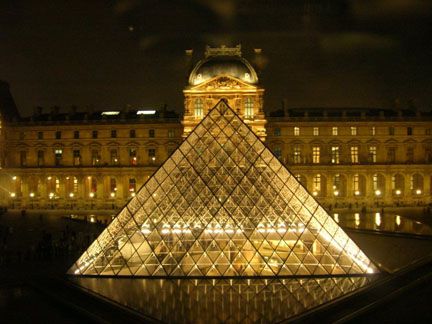
Adding to last week's Guggenheim comparison, ACSEF have now put out a release that "the firm behind one of the world’s most famous buildings has shown an interest in contributing to the proposed civic square project in Aberdeen." Not architects Pei, Cobb, Freed and Partners, who designed the series of pyramids but RFR Engineering who executed the design to I. M. Pei's specifications. Given ACSEF and Sir Ian's current penchant for culture and arts it is hardly surprising that they concentrate on the large Pyramid outside the Louvre Gallery, and shy away from the equally impressive Pyramide Inversee which is suspended as a skylight into the Carrousel du Lourve underground shopping mall.

Sealing the announcement, ACSEF claimed "that creating a Scottish Guggenheim or securing a major national gallery or museum was one of its main aspirations for the project", not explaining how this would sit with assurances that "the door is always open to Peacock" exactly. What ACSEF fail to understand is the difference between a "national gallery or museum" and a Contemporary Cultural Space. Aberdeen already has a national gallery in the form of Aberdeen Art Gallery which houses one of the most impressive museum collections in Scotland, and it has been said many times that the Northern Light Contemporary Arts Centre will not just exhibit art, but host a wide range of activities and provide a counterbalance to the traditional Gallery Museum of the Art Gallery and the small grassroots arts initiatives emerging in the city.

ACSEF's board is made up largely of business interests, with a couple of token representatives from the public sector to legitimise their status, as they have no actual funds or legal status. There is no cultural or arts reprentation on the group, which is understandble as ACSEF are the local Economic Forum, tasked with realising "the ambition for the future of the Region and to shape delivery of economic development in Aberdeen City and Shire." Since there have been no examples of any strong economic case for the development, and is aimed squarely at culture and civic use then why is it being steered by the Economic Forum, and not, say, the Cultural or Civic Forums? In

However as former head of Grays School of Art, Stuart MacDonald, points out "We already have plans for an iconic building by world-class architects Brisac Gonzalez, who have come up with a fantastic design for the new Peacock Arts Centre, which respects the landscape of Union Terrace Gardens and is capable of providing, at a reasonable price, an accessible, inclusive venue with the potential to become one of the best public buildings in the whole of Britain.
As well as acting completely outwith their remit for economic development, ACSEF are attempting to ride roughshod over the ten years of work Peacock have put in to developing plans for a world-class contemporary art centre for Aberdeen, and the international competition already won by Edgar Gonzalez of Brisac Gonzalez Architects.


"The project is very real and properly thought through with foresight at every level."


Accenting the unorthadox web-based campaign against the City Square, a post on twitter highlighted the unfortunate use of a live photograph of Annie Lennox used in the City Square Project Brochure advertising a possible use of the square for "celebrations both big and small." The Irony is not lost on Ms Lennox herself who revealed her strong opposition to the scheme in a post on her myspace blog last week. "They clearly “assumed” it would be fine by me.. as it makes it look as if I’m endorsing their vision..when I wasn’t even asked..they just went ahead in any case. Which is precisely what will happen if people don’t become pro active on the issue" was the response posted on her Facebook page and not long after the revelations, the Press and Journal reported that the "glossy brochure for Sir Ian Wood’s City Square plan in Aberdeen which features pop star Annie Lennox is to be scrapped."