Showing posts with label Scottish Arts Council. Show all posts

Saturday, 26 February 2011

Use It Or Lose It


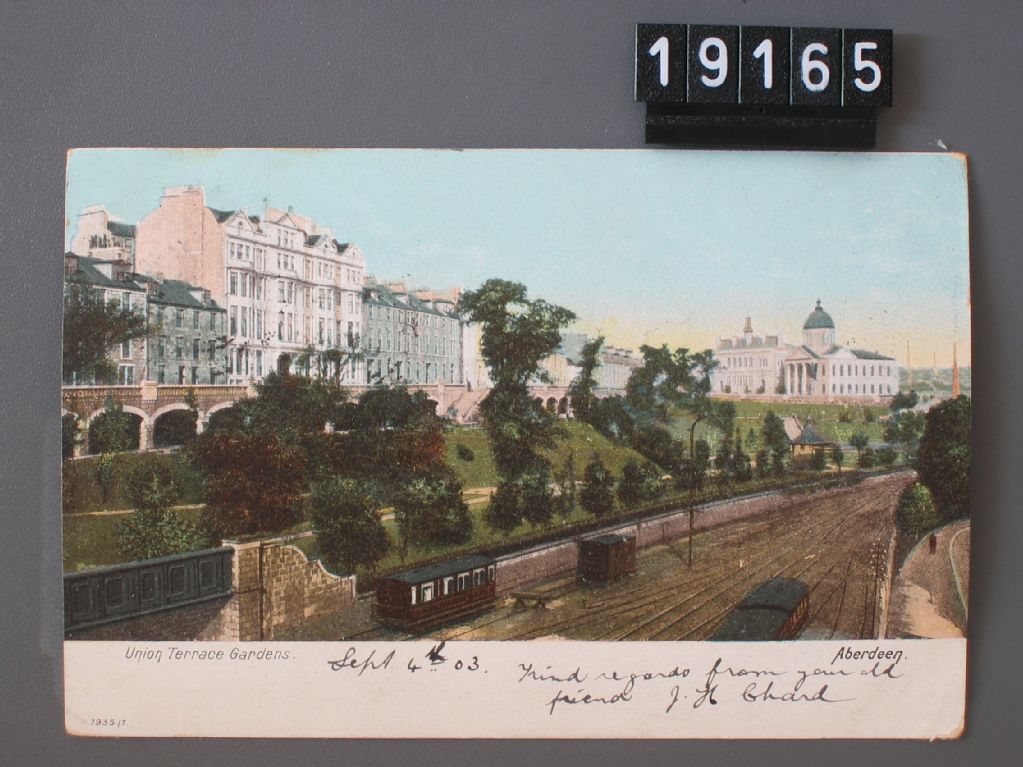
Following the demise of the Northern Light Contemporary Art Centre Scheme, spearheaded by Peacock Visual Arts, following the decision by Aberdeen City Council on May 19th to accept "in principle" an alternative scheme for Union Terrace Gardens there was a surplus of unused and somewhat unusable £9.5 Million. This at direct contrast with the scheme which had been amber-lighted, oil tycoon Sir Ian Wood's 'vision' for a five-acre, three story plaza to replace the Denburn Valley, which is short by at least £90 Million, ten times the money which had already been raised by the Peacock scheme.

In the months following the fateful council meeting the £9.5 Million which had been pledged to Peacock inevitably began to filter away. The £4.3 Million Scottish Arts Council grant was returned to new cultural body Creative Scotland and redistributed to other projects throughout Scotland. Aberdeen City Council held onto the £3 Million they had pledged, minus a small amount released to keep Peacock's campaign team running in the lead up to the Council Decision. However in the past week doubt has been shed on the future of the £2 Million pledged from Scottish Enterprise.

In January this year, the Press and Journal reported that Gordon McIntosh, director of enterprise, planning and infrastructure, claimed that the Scottish Enterprise grant had been prematurely withdrawn “The information that I was provided with last week was that the £1.6million was handed back last April,” adding that “The council was working under the assumption that the money was there when it wasn’t."

Gordon McIntosh: "£1.6 Million handed back last April"
However, Scottish Enterprise strongly refute these claims stating that "at no point did SE withdraw funding for the Contemporary Arts Centre in Aberdeen. Had the project gone ahead as planned and outlined in the legal agreement then SE would have honoured the funding agreement." This stance is backed up by documents provided by Scottish Enterprise detailing how the organisation had contacted Council Officers on three separate occasions towards the end of last year: September 15th, October 19th and November 19th in order to discuss options for alternative proposals to receive the remaining £1.6 Million of Scottish Enterprise money.

Two of the three documents provided by Scottish Enterprise clearly mention a March 2011 deadline for the re-allocation of the monies, while the third refers to identifying "alternative eligible projects which may meet SE's strategic objectives and conditions." The eligibility and strategic objectives and conditions relating to the grant were spelled out in a legal agreement between Scottish Enterprise and Aberdeen City Council dated 18th March 2009, which had been signed off by the city solicitor on 23rd March 2009, which also mentions a final deadline for allocation of monies by 31st March 2011.

The information provided clearly indicates that should the grant not be re-allocated then it would be returned to the Convention of Scottish Local Authorities in April this year, not last year as Mr McIntosh suggested in January. While at face value, looking at the numerous documents it could appear that mr McIntosh's claims were the result of a simple mistake, that the council officer had simply gotten his dates wrong. It remains to be seen how a council executive with such a large responsibility to the city could make announcements based on a seemingly minor oversight - especially when receiving monthly correspondence from Scottish Enterprise regarding Aberdeen City Council's responsibility to spend the remaining money. It is reckless at best for a local authority with such major and widespread financial problems to simply lose over a million pounds of public funding.

Another interesting note is the apparent discrepancy between the £2 Million awarded from Scottish Enterprise to Aberdeen City Council and the £1.6 Million mentioned in the documents from Scottish Enterprise which was required to be re-allocated or returned. The original legal agreement between SE and ACC "envisaged that £300, 000 of the Contribution was to be advanced by 31st March 2009" in order to "contribute an equitable share towards the advanced design stage of the [Peacock] Project." To this end £226, 000 was awarded to Peacock for "Architect, Design and Project Management fees", but a further £190, 000 was taken from the £2 Million in order to fund the Haliday Fraser Munro technical appraisal into Sir Ian's "vision" on behalf of ACSEF.

While SE ensures that "had the Contemporary Arts Centre project gone ahead SE would have honoured the £2Million grant in line with the legal grant offer", their money was being used to back two conflicting proposals, and the money for both came from a grant offer made to one project which was already in advanced design stages and had received full planning permission. In addition to the £190, 000 used to fund the technical appraisal, the Press and Journal revealed this week that the council had "secured permission to use £375,000 of the grant funding for Sir Ian Wood’s city square scheme" meaning that, in total, £565, 000 of the Scottish Enterprise grant awarded for the Northern Light Centre has been spent on the scheme which caused its collapse. That's over a quarter of the original grant.

The technical appraisal brief states that "the commission must deliver a technical appraisal which will inform an outline cost appraisal for three main options to develop Union Terrace Gardens and the Denburn Valley." The appraisal was to be carried out under a particular framework:

The framework for the options appraisal will fall under the following 3 headings:
1. Full street level decking
2. Partial street level decking
3. Re-design of the existing site without any street level decking
The appraisal must take into account a currently proposed project, with planning consent, to and create a £13.5M Contemporary Arts Centre (3,000 m²) on the West Side of Union Terrace Gardens.
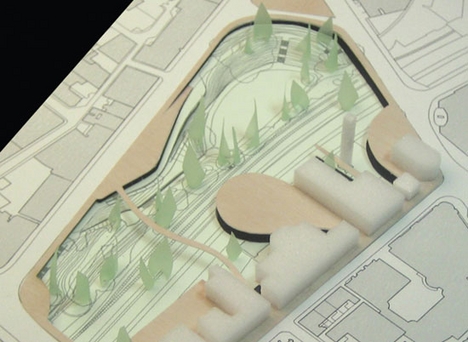
However the actual results of the technical appraisal pay lip service to the framework but adhere closely to Sir Ian Wood's personal vision for the space. While the Contemporary Art Centre is included as a must, it is only included on the West Side of Union Terrace Gardens in option 3, which is quickly and unceremoniously dismissed as it only "would create minor benefits for Aberdeen City and Shire." Option 2, while having the brief to look at partial decking, it is almost indiscernible from Option 1, and bypasses the instruction from the project brief of "incorporating elements from previously appraised/designed schemes where appropriate" and ignoring the Millennium Square scheme (pictured, right)which would fulfill most people's desire to cover the dual carraigeway and railway, leaving the gardens mostly intact. Option 2 inexplicably replicates the first option but only doesn't meet with Belmont Street on the western side.

The technical appraisal, while bringing the costs of the project in embarrassingly light, pushes for the first option - directly facilitating the abandonment of the designed and planned Contemporary Arts Centre for which the grant which paid for it was intended. An odd and consciously contradictory machination which is not wholly unexpected.

In the ten months since The City Square project gained approval in principle, other than a change of name to The City Garden Project, it has made very little progress. The project has as-yet failed to gain Sir Ian's promised £50 Million investment, even though he claims it is now written into his will, a project board has been set up but inexplicably excluding any architects, and the timetable for the scheme is already slipping further back.

Kevin Stewart: "Surprise." Photo: Evening Express
Speaking in Saturday's Press and Journal, ACC Depute Leader, Kevin Stewart, in the face of losing the remaining £1.2 Million defended the council's actions by claiming “The city council made strenuous efforts to retain the Scottish Enterprise money for cultural projects. In fact, we drew up seven separate proposals — each of them costed and each presented to Scottish Enterprise for consideration.


“We had every faith that the proposals we put forward were worthy of funding from Scottish Enterprise, met the appropriate criteria, and would have contributed to the cultural life of the city.”

However it is difficult to quantify exactly how "strenuous" these efforts were to draw up proposals for spending the remaining money when just over a month ago SNP Councillor Stewart, who is also convener of the council's finance committee expressed that "It comes as a surprise to me that this money was withdrawn long before we made decisions about Union Terrace Gardens." How could Aberdeen City Council be making strenuous efforts to retain money that apparently wasn't there?

The attempts made to steamroller through this mega-proposal are spreading their debris throughout the city council. It seems that in the haste to chase Sir Ian Wood's yet-to-be guaranteed money for a project which will see him as the shot-calling minority shareholder, due process is being cast aside and Aberdeen City Council are tying themselves up in knots over it. As the Union Terrace Gardens saga continues with breakneck twists and turns, game changing revelations and scant regard for what the general public want to see with this public development, even those who support and champion the development are becoming unsure of what stage the development is actually at. Only once the City Square has succeeded in its inevitable self-inflicted downfall will the true costs of the vainglorious project be apparent to the city of Aberdeen. We can only hope that by that point it is not too late to give Aberdeen the regeneration it deserves.

Sunday, 15 August 2010

Arts Over Elbow

Less than a week after Aberdeen City Council decided to back Sir Ian Wood's plan's for a street-level piazza and ironic Garden on the site of Union Terrace Gardens and the Denburn Valley, necessitating the council to abandon a plan which had assured their backing, for a Contemporary Arts Centre spearheaded by Peacock Visual Arts, Andrew Dixon, newly appointed CEO of Creative Scotland stopped by Aberdeen on his grand tour of his new turf. After a number of positive and sympatheric meetings with cultural practicioners and organisations throughout the city, The Press and Journal and Evening Express triumphantly heralded his arrival, pulling him right into the debate over the future of Union Terrace Gardens, proclaiming :"Arts Centre should back world-class Garden's Bid: Culture Boss In Call to Peacock."

The Press and Journal, the less sensationalist of Aberdeen Journal's twins diabolique, claimed "Sir Ian Wood’s plans for Union Terrace Gardens in Aberdeen received a surprise boost last night after the incoming boss of Scotland’s new arts and culture body praised the project." Rightfully, given the years of trepidation and suspicion around the motives and realities of the new body, the reports caused a ripple through the damaged cultural community of Aberdeen, still licking those fresh wounds since the approval of the City Square which spread quickly throughout the wider Scottish Art Community, those confused and shocked by what had transpired in Aberdeen, and those anxiously waiting for indications of the working practices of Creative Scotland.

While Dixon was quick to cry "misquote" in The Herald podcast saying "I never said I am a supporter of the gardens project as such. What we are interested in is getting the right cultural facilities for Aberdeen" and giving the official advice to those involved that "They ought to take a little time now to see how we can harness the energy that’s there, the public interest there and get something that makes Aberdeen a better place to live.” Despite his apology, Dixon had already stepped on a cultural landmine by making any comment on the fiasco, something which the Scottish Arts Council had refrained from doing over the course of the previous eighteen months. The Times accused Mr Dixon of "lauding the “ambition and vision” shown by plans for the project, which has been promoted by Sir Ian Wood, the oil tycoon", indeed describing the City Square as "a real opportunity to do something interesting for the future of Aberdeen." This provides an interesting view on a project which has been described as "a mad idea underpinned by the offer of big money which is an illusion" by the RIAS, and criticized, ridiculed and debunked by a long line of cultural practitioners, architects and critics.

Andrew Dixon's apparent lack of knowledge concerning the perspective of the cultural practitioners his organisation is supposed to support and represent is not suprising given the emergence of a email to an artist which suggests that he harbours "confusion over the role and responsibilities of the new national funding body Creative Scotland." Kenneth Roy of Scottish Review's analysis of the aforementioned email finds him "still no clearer what the chief executive of Creative Scotland is trying to say about his own organisation." Said email, directly from Dixon to an unnamed artist, writing to CS with frustration surrounding a funding refusal is as follows:

'I am sorry that you didn't find my answer convincing but perhaps you misunderstand that we will not be a funding body in the old sense of the Arts Council but a strategic body,. There will no no point in making multiple applications to us as we will be working more strategically with others agencies.'
In his editorial, Roy rightfully points out that the statement is in direct contradiction to a statement on Creative Scotland's own website to the effect that "Creative Scotland inherits the investment commitment of the Scottish Arts Council and Scottish Screen." The sense of confusion coming from the very head of this new organisation is indeed alarming. In an attempt to belay concerns expressed by artist groups, journalists and the individual artist (who may or may not be able to secure funding from the organisation to support their practice), Mr Dixon has been writing to those expressing concern. One such correspondence, sent to The Guardian's Charlotte Higgins:
"As a new organisation it is inevitable that there will be changes in both the way Creative Scotland operate and what we support from both predecessor organisations. That is what the organisation was created to do and I intend to put that into practice to the benefit of Scotland and its artistic and creative community."
going on to say:
"Creative Scotland launched on 1st July and the board met for the first time on 12th August and is beginning to develop the first corporate plan for the new organisation for 2011/12 in line with an agreed timetable with the Scottish Government by the end of the year."
This ties in with a reported comment from CS chair Sir Sandy Crosby, in relation to the role of the organisation that "he wasn't sure since there hadn't been a board meeting yet." Fair enough, one might think considering the relative infancy of the organisation, however the concept, and even the name "Creative Scotland" is not that new, having been on the Scottish Government's agenda since 2006 when introduced by the previous Labour/Lib Dem administration.

While the original Creative Scotland Bill failed to pass the finance committee in June 2008 with Labour MSP Ken MacIntosh stating "In her [Linda Fabiana, then-Culture Minister] opening statement, she led members to believe that the budget for the creative industries would be transferred from Scottish Enterprise to Creative Scotland. In her summing-up she then clarified that no such budget would be transferred. This is a total shambles and gross incompetence.”

However, the minority SNP administration were not to be perturbed with Ms Fabiani stating that "I am 100 per cent committed to establishing Creative Scotland to bring benefit to our arts and cultural sector as soon as possible. The Scottish Parliament has unanimously endorsed the principles of Creative Scotland, even though that bill did not pass in June." going on to describe how the Government "are ensuring this happens through the Public Services Reform Bill", which passed in March this year, with current Culture Minister, Fiona Hislop, describing how Creative Scotland "will build on the successes of the Scottish Arts Council and Scottish Screen, putting artists and creative practitioners at the heart of all its activities, enhancing Scotland's international reputation for cultural excellence, and enabling more people in Scotland to enjoy and take part in cultural activities."

Swiftly, Creative Scotland, and its £35,000 Logo were launched in the following months, with the Scottish Arts Council and Scottish Screen as swifly making way for the new organisation. Given the long and difficult process in establishing the new quango, you would suspect that over this time Ministers would have some ideas of certainty over the roles and responsibilities of the new organisation, and that perhaps its newly appointed board could have met and decided on its activities going forward, possibly before the dissolution of its predecessor bodies to inspire confidence in the agency, especially given the growing mass of critics throughout Scotland's Cultural community, which The Times described as a "state of near-mutiny and rebellion among the cultural establishment."

The confusion and uncertainty surrounding the newly-founded organisation has not just caused concern for those it is designed to support. Green MSP Robin Harper who tabled a motion in the Scottish Parliament setting out "That the Parliament notes that the full board of Creative Scotland has yet to meet and believes that this has led to a remarkable degree of uncertainty about that organisation’s function;" and asked that "Scottish Government to meet representatives of Creative Scotland as soon as possible and demand sight of its strategic plan and mission statement within a reasonable timescale and for Creative Scotland to undertake minimum expenditure on offices, staff and equipment until such time as its function can be fully defined." Creative Scotland's current expendature, in addition to the £60 Million budget it has been granted to fulfil obligations already allocated through the Scottish Arts Council, has included an the alarming aforementioned £35,000 paid to the Leith Agency for a logo described as "absolutely awful, uninspiring, doomy. A symbol for the times maybe but surely not what is wanted" among other, harsher, insults, a "launch" ceremony in WASP's new Briggait Initiative costing £17,ooo and £3.3 Million in administrative fees to cover the merger. All is not lost, however as "the merger of the arts council and Scottish Screen had led to a 20% reduction in staff numbers", not a sign of remorse or mention of the human aspect of this 20% reduction being people's jobs and livlihoods, people who were often artists, filmmakers or other creatives or professionals actively involved in the cultural sector.

One of the few things that is certain is that "The agency is to review its £18m core funding for 52 "foundation" arts and drama companies, theatres, cinemas and festivals from Shetland to Glasgow as the public sector braces itself for heavy and long-term cuts in government spending." which has caused a ripple of uncertainty through cultural professionals and organisations across Scotland unsure of what the future holds. One almost certainty with possible devastating implications, is "that direct funding to help make new Scottish films would end", given that "18,000 people are employed in Scotland’s screen industries" this certainly raises alarm bells.

Scottish Screen was established in 1997 as a merger of the Scottish Film Council, Scottish Screen Locations, Scottish Broadcast and Film Training and distributors of the Scottish Film Production Fund. Said Production Fund "initially set up in 1982 by the Scottish Film Council and the Scottish Arts Council" has been responsible for directly funding of countless feature and short films which otherwise would probably never get off the ground in Scotland. The support provided: "Maximum Investment - £300,000 - Feature Films (budgets over £500,000); £100,000 - Feature Films (budgets under £500,000); £250,000 - TV Series; £50,000 - Short Films" is integral to ensuring films are made, that filmmakers whose films may not be able to get funding in a conventional manner are supported and developed and ensures that the screen industry in Scotland is healthy and allows a huge portion of those 18,000 people working in the screen industries to remain in employment. If this direct funding for the production of Scottish films is to end, then it leaves one wondering what has become of the Scottish Film Production Fund and what will become of the Scottish Film Industry, the many short films schemes, such as Tartan Shorts, which have over the years allowed internationally acclaimed and award-winning Scottish filmmakers such as Peter Mullan, David MacKenzie, Kevin MacDonald et all have their films made.

Unfortunately Creative Scotland's apparent direction is leading by example brought forwards by our new Conservative Overlords in Government. Jeremy Hunt, the new Culture Minister announced in July the Government intent to scrap the UK Film Council, a move motivated through "our drive to increase openness and efficiency across Whitehall, it is the right time to look again at the role, size and scope of these organisations."
The move was quickly condemned by Tim Bevan, the body's chair claiming that the move "has been imposed with no notice and no consultation... I think we can all agree that this is short-sighted and potentially very damaging, especially as there is at present no roadmap setting out where the UK Film Council’s responsibilities and funding will be placed in the future.” While assurances have been made that committments to the financing of new British Films will not be cut, and that the UK Film Tax Credits will remain in place, there has been no indication as to who will now administer and distribute the cash and under what criteria future applications will be judged under.

Further alarm bells begin ringing with the abolition of the Film Council, as it came alongside assurances from Mr Hunt that "16 public bodies, including the Museums, Libraries and Archives Council (MLA) would lose their funding as the government committed to "increasing the transparency and accountability of its public bodies, while at the same time reducing their number and cost."
This move spells out categorically that the country's cultural industries and communities are in for a huge hit as part of the cuts planned by the new Government in an attempt to ride out the recession, amid a review of arms-length organisations which could threaten the integrity and critical autonomy the arts represent within society.

Andrew Dixon's response in the face of possible funding cuts and a "tough" immediate future is to "try to increase private funding and sponsorship, form alliances and share resources", which could be seen as essentially privitising the arts. Private funding and backing is an uneasy bedfellow with creative and expressive arts, which could challenge the aforementioned integrity and critical autonomy, the age of decent philanthropy is long dead and these days companies and individuals who invest wish to see a return in their investments, to see what's in it for them, and not simply for an artist. Keen sensible business sense means that a company would require to invest in a well established "brand", an internationally successful and acclaimed Artist, or Filmmaker, or play, one that will definately bring them a return. However these success stories are already made, they don't necessarily need investment in a way in which the unknown, struggling "emerging" artist does.

In the face of the 25% cuts which have been proposed across all public bodies, a survey carried out by The Threadneedle Prize emerged that "And a fifth of the 2,022 British adults questioned said visual arts should not be given any government funding" while a blog by Jonathon Jones claims "it's no use the art community complaining about this image when it has spent the last few years extravagantly vaunting connections with big money." However, Samuel West, of the London Evening Standard spells it out perfectly:

"The arts cost only 0.07 per cent of total public spending — 7p in every £100. The Arts Council theatre budget for 2008 was £54 million; in return, the theatre paid back £76 million in VAT in London alone. That's a 40 per cent dividend.

Why doesn't the Chancellor want to fund that level of return? £54 million is one 30,000th of the sum used to bail out the banks."
As does Glasgow-based Artist David Shrigley:


Shrigley's film was used to launch an artist led campaign to Save The Arts amid the cuts, and has a petition which you MUST SIGN. A further group I Value The Arts is also giving information and putting pressure on the Government to go easy on the cuts to culture to ensure that the vibrant, diverse and unrivaled strength we have in terms of culture within the UK which has built up over the last fifty years is not sacrificed by short-sighted beurocrats and politicians in a party-political blame game and a vain attempt to save face.

Petty squabbles over who is to blame for the current economic situation, or indeed simply returning to the greed-based globalist society which lead us to the situation we find ourselves in is not the way forward. Culture, the arts, free expression and creativity, something that is built not from capital gain or commercial worth, something universally inclusive, something which comes from the soul and enriches life without asking for anything in return should not be a victim of a system which sets out to exclude and create divisions.

Tuesday, 20 April 2010

Give It Up

"Back my vision for the city or lose £50m, Sir Ian warns" read the headline from March 14th Press and Journal announcing the results of the Public Consultation into his own plan, majority funded by us, the taxpayer, The City Square Project. Despite the results of the consultation coming back with an astounding 55% against, a majority of 11%, Sir Ian still sees this as “marginally negative” and not enough for him to take to the outcome of the Public Consultation, which has been payrolled to the tune of around £300,000 by the same Public. Adding to the pressure, ACSEF Chair Tom Smith warned that “Rejection of this £140million investment will damage Aberdeen city’s reputation.”

Speaking to the BBC, Wood claimed that "I will be disappointed if Aberdeen City Council decide in their wisdom not to proceed with the transformational scheme" going on to explain his scheme as "The vision is to maximise the attractiveness of our city to win the new energy opportunities and become a world energy city. My offer of funds was to help achieve that, not to spruce up our city centre." Wood's statement, while consciously contradicting itself, again lacks any evidence which would show how or why capping off the Denburn Valley would secure long-term "jobs and prosperity" or how not building the square would lead us to certain doom.

Everyone's favourite benevolent Knight even goes so far as to try and suggest that "What is referred to as 'my vision' is in fact the vision, aspiration and hopes of many, many Aberdonians for the future economic and civic wellbeing of our city and region as North Sea oil winds down," a statement which inspired boos and jeering when he made the same claims at the Labour-organised public debate, and one that certainly does not wash in the face of many, many Aberdonians voting against the scheme in the consultation.

Sir Ian uses the article to backtrack on his previous promises, stating "My funds offer, spelt out in November 2008, was clearly conditional on achieving transformational change, and on Aberdeen City Council and the people of Aberdeen supporting the vision," however, tracing back to November 2008, Sir Ian said "I am only prepared to provide up to £50 million if it has strong support from the people of Aberdeen and the North-east of Scotland," no mention whatsoever of the Aberdeen City Council. An ACSEF spokeswoman reiterated this during the consultation period "If the public does not support this project then he will withdraw his offer of £50million and it will not go ahead," and Wood, going as far as to goad the public by saying "If the citizens of Aberdeen decide they don’t want this city square then I’ll just finish up a miserable old Aberdonian who’s £50million better off." and reiterated the point himself at the beginning of the consultation by saying "I have always said that if the public does not support this vision then my offer of funding will be withdrawn."

Of course, now that the public has not backed his Scheme, Uncle Ian has decided that the decision must now be down to ACC as "This is clearly the most valid exercise of the democratic process.” It seems that Wood is now invalidating ACSEF's "robust and comprehensive" Consultation, and indeed the views of the people of Aberdeen and the fundemental keystone of democracy: Majority rule.

Thursday, 11 March 2010

Watch This Space

Aberdeen has spoken.

The results of the £309, 676 Public Consultation into Sir Ian Wood's City Square Project have been published. "The majority of people who took part in a consultation on plans to create a civic square in the heart of Aberdeen opposed the plan" with the overall totals for the response to Question Three "Do you Support the City Square Project" coming in with 44%(5242) in favour and 55%(6512) against the City Square Proposal (Also, inexplicably 2% against, making the Consultation inexplicably widespread in it's uptake of 101%) which means that there is not the majority support Sir Ian and his cronies at ACSEF desired to push through the project.

The quantative results, which contributed to what king of contradiction, Tom Smith, described as the "sheer weight of feedback meant it would be unable to announce the outcome until April 13",(two weeks after the initial March deadline for Peacock Visual Art's SAC funding for the Northern Light Contemporary Arts Centre) spelled out how most respondents (17%) to the questionaire desired Formal Gardens while "The second and third most important facilities were a contemporary arts centre and a cultural centre for the performing and visual arts."

Already ACSEF's policy is to skew the results and not take the majority of opposition to heart, as Smith claimed "This was never intended to be a referendum type consultation." in response to demands by North East MP Lewis MacDonald for results being released before the April 13th date, saying “Given the importance attached by Sir Ian Wood to support for his proposals, the key question would appear to be whether or not these proposals commanded clear support from the majority of respondents." Now, ACSEF are, predictably using the quantative data which apparently points to "the public have said they want change. They believe the gardens are underused and inaccessible. Significant new green space and a cultural centre must be part of this change that would give us a more attractive and safer city centre and kick-start the wider regeneration of the city centre."

However, also unsurprisingly, Tom's blinkers don't notice the proposal the City Square Project could almost have been designed to scupper, the proposed Contemporary Arts Centre. Given that the results themselves show that 55% of people are against the proposals, but there is a desire for some sort of change, with favour leaning towards Gardens, a Contemporary Arts Centre and a Cultural Space, then Brisac Gonzalez's designs are the obvious choice. Everything that the people want to do with the Union Terrace Gardens can be achieved through the Peacock plan and the retention of the existing Gardens, for a tenth of the cost of the City Square, which the majority of respondents did not want.

However, even before the results were announced, Tom Smith giving the voice to ACSEF's finger which appears to have been placed on a slab of concrete rather than anywhere near the pulse was already denouncing the results of the consultation saying “It should not fail because we do not have the necessary vision and ambition.” Although ACSEF had said "we do not want to pre-empt the consultation, we want to make it clear to people that our plans are not about replacing gardens with a concrete square but about using the natural sloping topography of the location to create a civic space with gardens which everyone can enjoy" their line now the consultation results are in, and not in their favour is remarkably similar "This project is about so much more than the gardens, it is about a radical transformation of our city that will help deliver the jobs and prosperity we need for the future success of the region" despite being unable to demonstrate exactly how the Square will deliver "jobs and prosperity" or how, as Sir Ian described, it would be "essential to safeguard the future prosperity of the city."

In fact, adding to the £100 million shortfall in the City Square Scheme, discussions such as Tax Increment Financing and the establishment of a Business Improval District in the city centre requiring a business rate hike which "would be ring-fenced and used to fund ACSEF priorities", would actually make the area around the square less desirable. Businesses find it hard to move into Union Street because of the high rates, then raising them will hardly do what ACSEF believes the Square will do and "kick-start the wider regeneration of the city centre."

After the conclusion of the process on March 5th, a statement on The City Square Project website, PR consultants, Weber Shandwick, announced that "The process will begin with each single response being logged, checked and duplicates removed. The figures will then be analysed along with a vast amount of qualitative data, which will be studied for common trends. ACSEF will then announce the result of the consultation on Tuesday 13 April." Tom Smith, of ACSEF, defending this date as the "sheer weight of feedback meant it would be unable to announce the outcome until April 13" going on to describe how "the consultation report on Edinburgh trams took 12 weeks to compile based on feedback from 3,500 people. There has been three times that amount of input from the public for the city square project."

Continuing Tom Smith's trend of not checking previous comments made this unsurprisingly contradict ACSEF's statements the week before blasting the consultation process saying "public participation was so low that there was a danger that Sir Ian would withdraw the £50million he has pledged" and Tom Smith's own fears that "the damage to our reputation should we reject it would be significant.” However, the City Square project has been the subject of a high-level of criticism, in a BBC Documentary by Jonathan Meades, been slammed by Architecture and Design Scotland, ridiculed in Private Eye, and the situation inspiring laughter in a crowd listening to Edgar Gonzalez give a presentation on the Northern Light Centre, which proves the idea of destroying a garden and leveling off one of Aberdeen's unique selling points has already damaged the reputation of the city, and will be likely to do more so should public opinion be ignored and the project proceed.

While the consultation process was originally scheduled to begin in July, directly after the publication of Haliday Fraser Munro's technical fable, however an alleged dispute and then the administration of original consultants Glasgow's Lighthouse meant the process was delayed. From then it took almost six months for ACSEF to announce a date for consultation which was then due to begin in November and to be carried out by PR consultations Weber Shandwick, supposedly to be completed in time for the expiry of the original extension of Peacock's £4.3 million grant from the Scottish Arts Council.

However when November came along, ACSEF reacted to a three month extension from the Scottish Arts Council to investigate compromised approaches to the development of the Denburn Valley and to allow time for consultation results to be collated by announcing "it was postponing its consultation on the square – due to have started earlier this month – until the new year." ACSEF's criteria for the "compromise" was still to strongly adhere to Sir Ian's personal perameters for the project, which would in no way allow for the original Gardens to be retained. Despite knowing full well that the Scottish Art's Council's uncertain future after April 2010, ACSEF chose to ignore the funding deadline of late March and the understanding that results would be published in time for that deadline, and decided that results would not be released until two weeks later.

Fortunately the SAC, in reaction to ACSEF's games and with their own future still unknown, extended the deadline for another two months. Ian Munro co-director of SAC stated "'“The outcome of the recently concluded public consultation, led by Acsef, will have a significant influence on the continued development of the existing Peacock scheme. The initial timetable given by Acsef to announce the outcome of its consultation on City Square was scheduled for March. However, this has now been delayed until April 13. As a consequence, the Scottish Arts Council will now review its position in June 2010 at the next scheduled meeting of our lottery committee.”

During a Youth Consultation session last June Sir Ian was adamant that we live in a democracy and and therefor only had a single vote, and has sade throughout the process that "If the public does not support this vision then my offer of funding will be withdrawn." Although now that the public has expressed that they indeed do not support his vision, Wood is showing no signs of backing down. Choosing not to pay any heed to the negative reaction to the consultation into his plans, Sir Ian is now leaving his money on the table until a full council vote on the matter, scheduled for May 19th saying "This is clearly the most valid exercise of the democratic process and I am prepared to leave my financial offer on the table until these deliberations.”


“However, unless Aberdeen City Council at that meeting decide that the project should proceed with their backing, and that they will step in and take a key leadership role along with Aberdeen City and Shire Economic Future (Acsef), my financial offer will be withdrawn.”
Putting extreme pressure on the council now with his threat of taking away his £50 million being left down to ACC, with them taking direct blame for its refusal. However ACC Labour group leader Willy Young stating that "the people of Aberdeen would not be “bullied” into accepting his plan" going further to say "If Sir Ian Wood wants to continue with his project he needs to start listening to the people of Aberdeen and stop lecturing them. It is obvious they have said no.”

However, Liberal Democrat Council Leader John Stewart claimed that he was "concerned about ... people taking this decision for the right reasons – and that is for the long-term future of Aberdeen.” with SNP depute leader Kevin Stewart saying “We can no longer deal with the city centre in terms of a piecemeal solution." While giving nothing away, the council seem to be making noises echoing the thoughts of ACSEF and Sir Ian, in particular Tom Smith's emphasis that "This money is not available for other projects or piece-meal developments." It seems the pressure ACSEF, as Aberdeen Council's Economic think-tank are going to continue pushing the city square as the only way Aberdeen could ever achieve external investment while continuing to forecast doom if it is not taken on board: "If we let this window close on us, the clear message will be that we do not have the ambition or the foresight to prevent a downward spiral that will see a serious decline in our economy, the gradual loss of businesses and consequently jobs and quality of life."
Without displaying in demonstrable proof of why the Denburn Valley remaining generally as-is is a ticking time bomb to the destruction, and against statments made by the Scottish Council for Development and Innovation who stated that "should the Union Terrace Gardens/Denburn Valley project not be supported, SCDI believes that the north-east economy can still be successful in the long-term.”

Amid the "bullying", feet stamping, hypocrisy it cannot be denied that the results of the consultation are a victory for those seeking to Save Union Terrace Gardens, an eleven percent majority of those who filled out the formal questionaire opposed the city square. While both the I Heart UTG Petition and "Support the City Square" petition were included in the report, their numbers were not included in the statistics of the results. There was even a disclaimer after the mention of the I Heart UTG Petition which pointed out "It should be noted that this petition was running for six months prior to the start of the public consultation." Although, just to be clear, while the petition did indeed start six months before the consultation, this graph put together by a supporter shows a comparison of the day-to-day uptake of both petitions, with there being a very obvious trend throughout the consultation period.
While ACSEF have shifted the decision making powers onto Aberdeen City Council, the results of the consultation are very clear. 55% of respondents said NO, and what the people said they want: accessibility, Green Space, Contemporary Arts and Cultural Centre, are cornerstones of the Peacock Visual Arts development. Tom Smith has claimed that "The public have said they want change. They believe the gardens are underused and inaccessible. Significant new green space and a cultural centre must be part of this change" while this is his attempt to justify the City Square as "absolutely not dead in the water" it highlights the sheer lunacy of their plans to destroy a Garden to build a garden, and to stymie a ten-year plan for a Contemporary Arts Centre put together by experts in their field, to start from scratch developing another one.

Going forward, the people of Aberdeen must continue to appeal to their councillors, those we have elected to represent us to do the right thing. An individual with Money must not be more important than the majority of citizens in the city who are rightly concerned about cost, locatation, timescale and environment. Please keep contacting your councillor, you can find out who they are at www.writetothem.com, and urge them (politely) to do what the people have wanted and ensure democracy is played out in Aberdeen. Also, the I Heart UTG petition is still active and we will be encouraging people to continue to sign it and pass it on until the full council meeting on May 19th.

The people of Aberdeen have not voted for the City Square, and the things they expressed they have wanted is already planned, funded and will cost a tenth of the approximate price for the City Square while saving the face of Aberdeen both internally and externally. Please let your councillors know this.

Tuesday, 2 March 2010

An Inevitable Victim of Development

With less than five days to go on the public consultation into The City Square Project, the results of the process are beginning to roll in, ACSEF appear to be looking for a getout clause from their "robust and comprehensive" exercise.

On Monday the Evening Excess published the results of an independent opinion poll they themselves had commissioned Ideas in Partnership, yet another PR company, to carry out relating to the City Square. The article highlighted that "the survey of 500 people found just 38 had made the effort to provide feedback on the £140 million scheme put forward for Aberdeen’s Denburn Valley" and that the straw poll of the 500 asked brought results in as "266 (53%) against and 230 (46%) in favour of the proposals to raise the area to street level. Four people (1%) did not have an opinion on the proposal." While there is a tight margin between for and against votes, the apparent low turn out appears to have instilled a fear in Sir Ian Wood: "Unless the majority express their views formally through the public consultation in the remaining few days, there is a real risk this project will not go ahead" going on to say "We have always recognised that the strong negative opinion will make up a large part of such a low participation."

As usual the statements made by ACSEF and those by Weber Shandwick regarding the same subject are not quite in alignment. On the City Square Project site a press release from the 23rd February claims that "official participation is higher than consultation on the Forth Crossing, GARL and Edinburgh Trams." and that "Participation in the City Square Consultation looks set to be one of the highest in Scotland," describing participation as "unprecedented" and a "huge response." As expected the responses to date from Weber Shandwick have been by the book in comparison to the downright unprofessional conduct from The Big Partnership and ACSEF as Weber Shandwick have been tasked with carrying out the consultation while ACSEF have a vested interest in making sure the scheme goes ahead.

The brief for the process outlines how Scottish Enterprise would be informed of progress daily by the consultant with further regular engagement between the consultant to "liaise with a small Working Group representing the larger Client Stakeholder Group." The working group includes Dave Blackwood from ACSEF, Jennifer Craw representing Sir Ian Wood, Fraser Innes representing Aberdeen City Council, and Derick Murray from NESTRANS. This means that throughout the duration of the consultation these stakeholders are being informed of how the results are going which has presumably dictated the PR output from ACSEF over the last two months. While stating initially that they "do not want to pre-empt the consultation", it seems now that the results are coming in that they are looking to distance themselves from it.

Throughout the process, Sir Ian has been insistant that the Civic Square is "essential to safeguard the future prosperity of the city" and that "Aberdeen faced a bleak future and serious decline" attempting to forcast certain doom if the Square is not accepted by the Aberdeen population, obviously without explainging how the creation of a five-acre expanse of non-commercial, non-retail civic space is so "essential." This week the north-east committee of the Scottish Council for Development and Industry (SCDI) spoke out in favour of the City Square Project, however were quick to stress that "should the Union Terrace Gardens/Denburn Valley project not be supported, SCDI believes that the north-east economy can still be successful in the long-term” dispelling once and for all the scaremongering tactics touted by Sir Ian and ACSEF as attempts to use fear to encourage the North-East public to support Wood's personal vision for a five acre space which belongs to the public of Aberdeen.

Also emerging in support of the plans this week was Stewart Spence, using more of the negative rhetoric used by supporters of the Square damning the city centre. Mr Spence declared that "he warns guests to wear blindfolds if they visit the city centre." Hardly the most inspiring way to market his exclusive hotel as belonging to a city which isn't worth looking at, however of course he can see a solution, claiming that "only way to restore civic pride was to back Sir Ian Wood’s proposal for a new civic square." Surprising how that suddenly destroying Union Terrace Gardens and decking over the Denburn Valley has suddenly become the only way to turn around Aberdeen's unfortunate decline, especially as it was never considered as such until Sir Ian decided it was worth £50 million of his personal fortune. Unsurprisingly Stewart Spence sits on the ACSEF board, making him the fifth of the ten business representatives on the board to speak out in favour of the project that they themselves are promoting.

Also this week (and it's only Tuesday at time of writing) Tom Smith, ACSEF chair, has jumped on an unsubstantiated claim by Alex Salmond at the ACSEF Youth Summit that "the funding [for Peacock] would be available whether the arts centre was in the gardens or as part of the new square." As usual, a press release was put out without ACSEF checking the facts with Peacock themselves, or even funding body Scottish Arts Council who have stated the funding would have to be earmarked by the end of the month. Smith claimed that "We can have it all," again ignoring the huge proportion of non-Peacock supporters who wish to retain Union Terrace Gardens. Unable to deny that the Gardens will be excavated to make way for the concrete and steel structure ACSEF choose to ignore the concerns of the thousands of citizens who simply do not want to see the Gardens removed, or even want to see the great expense involved with removing those Gardens to create a superficial street-level ornamental garden.

As friday draws ever closer only time and press release will tell how many more transparent tactics ACSEF will employ in order to put their own ignorant and environmentally unsound stamp on the face of a City which does not belong to them. Aberdeen City Centre belongs to the people of Aberdeen, and to anyone who cares about the city and the shape and future of the City Centre should be decided by them, and not a single man with a narrow, twenty-year old vision.

Support UTG from Adam Proctor on Vimeo.

Sunday, 21 February 2010

A Real Architectural Blight


“If I have a headache I don’t get a foot massage,”